FMCW LiDAR
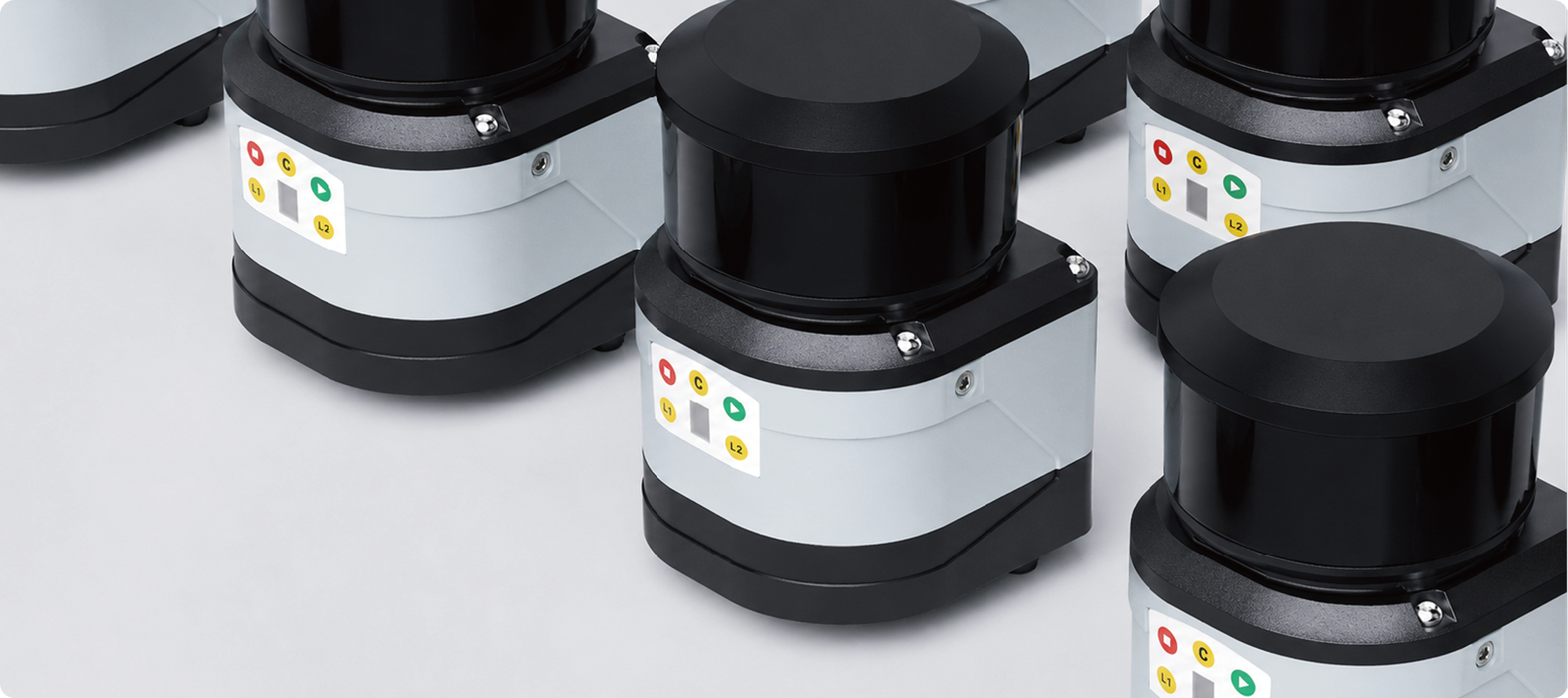
PRIVION DL Series — Industrial FMCW LiDAR
The DL Series maintains reliable detection performance in conditions where conventional LiDAR may be vulnerable, including snow, rain, intense sunlight, dust, and smoke.
Based on frequency-modulated continuous-wave technology, it analyzes the frequency characteristics of reflected signals to measure distance and velocity simultaneously.
01 Built for Large-Scale Automation
Each DL Series LiDAR uses a unique signal pattern. Even when many AGVs and AMRs operate in a dense environment, the sensors remain resistant to mutual interference regardless of fleet size. Systems can be deployed freely without additional anti-interference design or restrictive sensor placement.
02 Distance and Velocity Together
Distance and velocity of moving objects are measured simultaneously, eliminating the need for a separate velocity sensor. This simplifies system architecture and improves response speed in applications such as cranes and AMRs.
03 Detects Difficult Materials Reliably
The DL Series addresses common LiDAR challenges such as diffuse reflections from metal surfaces and low reflectivity from black materials through a high-power 1550 nm wavelength and precise FMCW signal analysis. Objects can be detected accurately even when reflected signals are weak or irregular.
Industrial LiDAR must maintain reliable detection not only under simple test conditions but also around complex metal structures and difficult environments. Fog, external light sources, mirror-like surfaces, strong ambient light, and multiple reflectors can reduce detection performance and introduce signal interference in conventional ToF LiDAR. These limitations require sensing and signal-processing architectures designed specifically for industrial environments.
Operating Principle
Velocity Measurement
Interference Immunity
Resolution / Accuracy
Adverse Weather
Primary Wavelength
FMCW LiDAR
(Frequency Modulated Continuous Wave)
Frequency-Modulated Continuous Wave
Distance and velocity are calculated together from the frequency shift between transmitted and reflected signals.
*Doppler-Based Velocity Measurement
Velocity is measured directly from the Doppler frequency shift, without a separate sensor.
Strong Interference Immunity
**Coherent detection resists ambient light and interference between multiple sensors.
High Resolution and Accuracy
High-resolution distance measurement enables stable detection in industrial settings.
Performance in Adverse Conditions
Signal processing stays stable in fog, bright light, and highly reflective environments.
1550 nm
This eye-safe wavelength supports higher power and stable signal processing outdoors.
ToF LiDAR
(Time of Flight)
Pulsed Time-of-Flight
Distance is calculated from the time it takes a laser pulse to return from an object.
Time-Based Distance Calculation
Processing relies mainly on distance data and can be affected by environmental conditions.
More Susceptible to Interference
Performance can be affected by reflected light or pulses from other LiDAR sensors.
Limitations in Long-Range Precision
Precision over long distances is difficult to maintain and easily affected by external conditions.
Affected by Environmental Changes
Fog, bright light, and reflective environments can cause scattering and absorption.
905 nm
Signal absorption and scattering can reduce performance in certain conditions.